

Analysis of the advantages of wood plastic door materials and structures
Advantages of Wood Plastic Door Materials
The combination of environmental protection and texture
WPC wood plastic doors blend the ultra-fine powder particles of precious wood with polymer resin, and are crafted through exquisite molding techniques, retaining the natural texture of wood while also possessing the durability of plastic. Its appearance is realistic with a wood like effect, and there is no need to use glue to bond it throughout the entire production process, ensuring that no harmful substances are produced. This innovative material is not only practical, but also reflects a commitment to environmental protection.
Performance and safety features
Wood plastic doors not only combine the dual advantages of wood and plastic, but also demonstrate excellent performance in structure. Its unique cavity design effectively prevents deformation issues, while also possessing multiple advantages such as flame retardancy and insect resistance, providing a strong guarantee for home safety. In terms of design, wood plastic doors are mainly characterized by a minimalist style, which is both modern and fashionable, adding a touch of brightness to the home environment.
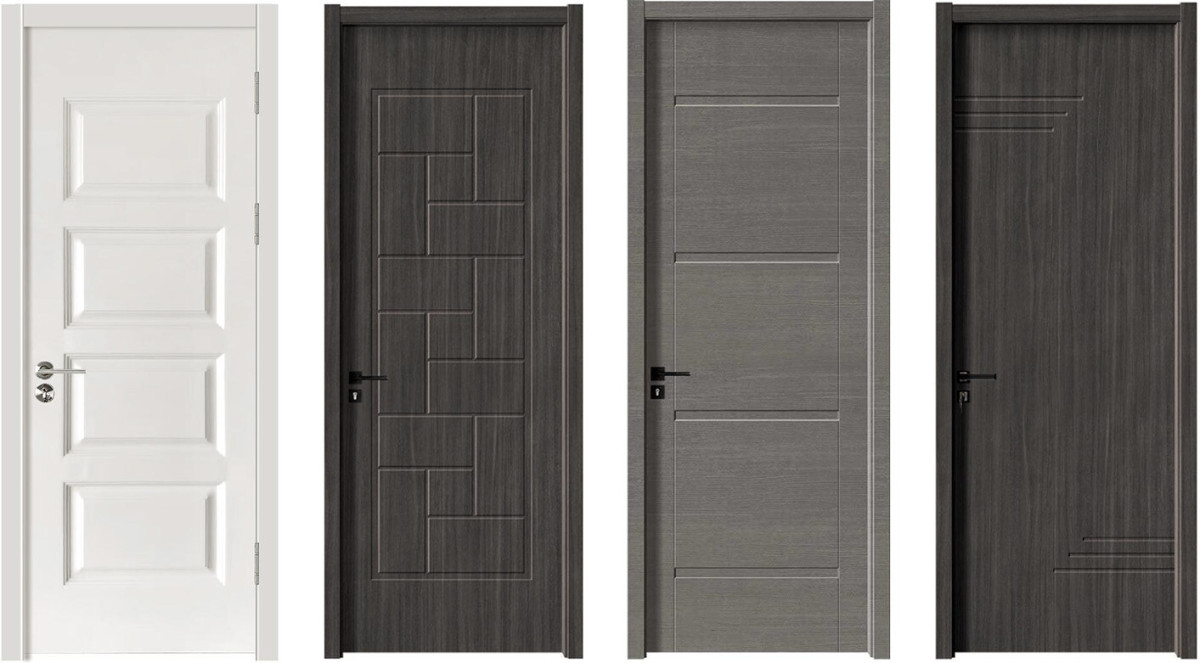
Advantages of Wood Plastic Door Structure
Closure and construction techniques
So, compared to traditional wooden doors, what are the advantages of WPC wood plastic doors?
The wooden doors we refer to in daily life mainly include two types: solid wood doors and solid wood composite doors. Solid wood doors are finely crafted from a single piece of wood, while solid wood composite doors are made through clever branching and inlaying of solid wood segments. Although the price of solid wood composite doors is more affordable compared to solid wood doors, both have a common drawback - they are not resistant to water and moisture. In damp or insect infested environments, these wooden doors are prone to insect infestation, mold growth, and even deformation or cracking due to changes in air temperature and humidity.
In contrast, WPC wood plastic doors overcome the above problems due to their unique material properties. It not only successfully avoids these inherent defects of wooden doors, but also achieves an excellent balance between price and performance.
The skeleton of wooden doors is usually composed of multiple short pieces spliced together or bonded with adhesive. The surface of the door leaf is covered with a decorative panel and the edges are sealed around to enhance structural stability. The WPC wood plastic door adopts a unique molding process, mixing wood powder with PVC and extruding it in one go under high temperature and high pressure environment, thus constructing the overall cavity structure of the wood plastic door. The inner layer is cleverly connected by more than ten reinforcing ribs, making the thickness of the door leaf reach 43 millimeters, which is thicker than ordinary wooden doors (with a thickness of 38-40 millimeters). In addition, the single weight of a standard door leaf is about 22 kilograms, indicating that wood plastic doors are not inferior in strength to wooden doors, and their durability is even better.

Ask For A Quick Quote
If you are looking for more information on our services, or how we could potentially help, we would love to hear from you!